
Principle of Oil-Gas Separation in Oil-injected Screw Air Compressors
2024-11-27
Oil-injected screw air compressors are widely used in modern industry due to their efficiency, stability, and cost-effectiveness. One of the most critical components in their operation is the oil-gas separation system, which ensures the purity of compressed air and protects the system from damage. Let’s break down the oil-gas separation process and its importance.
1. What is Oil-Gas Separation?
In an oil-injected screw compressor, oil-gas separation is essential to remove lubricating oil from the compressed air to maintain air quality and optimal compressor function. This process relies on several physical and mechanical mechanisms, including mechanical collision, gravity separation, coalescence, and fiber filtration.
2. Oil-Gas Separation Process
Formation of Oil-Gas Mixture
Lubricating oil is injected into the compressor's screw cavities, where it mixes with the air being compressed. The oil-gas mixture is then expelled into the oil-gas separator for further processing.
Mechanical Collision Separation (Coarse Separation)
The oil-gas mixture enters the separator’s coarse separation zone. Here, larger oil droplets are separated through mechanical forces, such as centrifugal and gravitational forces. Early separation methods used baffles or obstacles to slow down the mixture, allowing oil droplets to collide and coalesce. However, modern separators typically use centrifugal force (cyclonic separation) to more effectively remove larger oil particles, achieving up to 99.7% separation of oil.
Coalescence and Fine Filtration (Fine Separation)
After coarse separation, the mixture moves to the fine separation zone, where small oil droplets coalesce on filter elements (typically made from materials like glass fiber). These larger droplets then settle at the bottom of the separator. The fine filtration stage removes oil particles smaller than 1 micron, significantly improving the air quality.
Separator Design and Efficiency
The design of the oil-gas separator plays a crucial role in efficiency. Factors like oil droplet size, mixture velocity, and separator design all impact the separation process. Optimized separators can greatly improve oil removal efficiency, reduce energy consumption, and ensure lower maintenance costs.
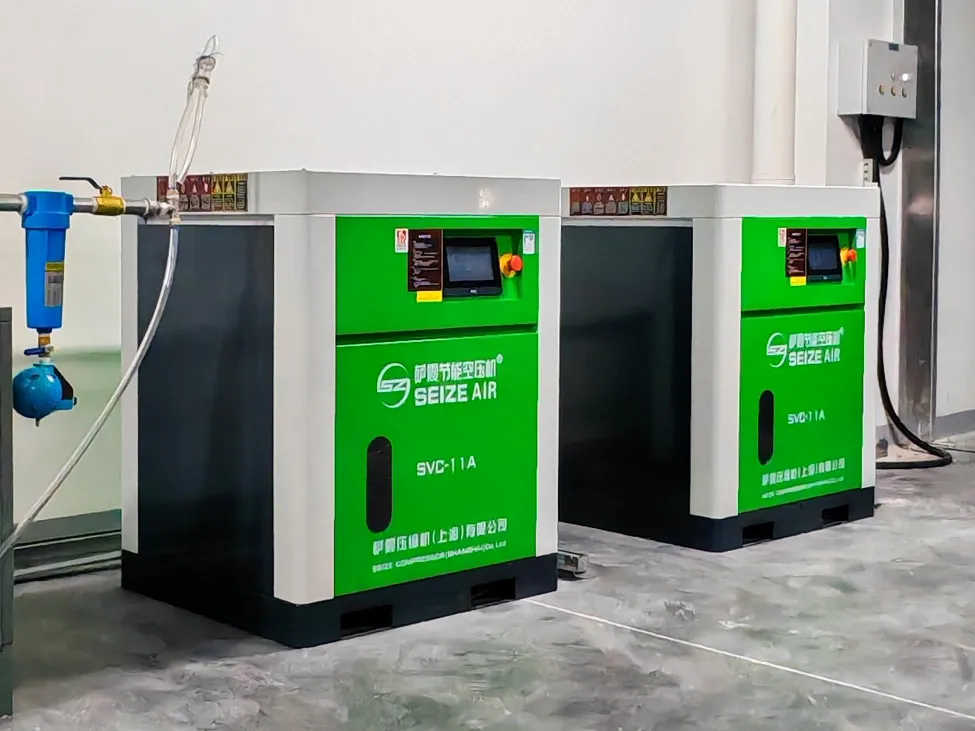
3. Importance of Oil-Gas Separators
The oil-gas separator is vital in ensuring the quality of compressed air. It reduces oil content in the compressed air, preventing contamination that could damage downstream equipment or affect product quality. Additionally, a well-functioning separator helps recycle lubricating oil, reducing waste and lowering operational costs.
In industrial applications, clean, oil-free air is essential for maintaining machinery and product standards. Effective oil-gas separation ensures reliable compressor operation, lower maintenance costs, and improved energy efficiency.
Oil-injected screw compressors are critical for many industrial applications. Understanding the oil-gas separation principle and ensuring efficient separation is key to maintaining the longevity and performance of the compressor. With ongoing technological advancements, the future of oil-gas separation holds significant potential for improving both environmental and operational efficiency.
Contact us at://www.eescompressor.com/
WhatsApp:+86 15317057736

 Seize Oil-Free Screw Blowers: The Ultimate Energy-Efficient Air Compressor Solution for Industry 4.0
  Maximize Energy Efficiency with Heat Recovery Systems for Energy-Saving Air Compressors
  Top 7 Advantages of Centrifugal Blowers for Industrial Applications
  The Revolutionary Benefits of Permanent Magnet Variable Frequency Air Compressors: A Game-Changer for Modern Industries
  Variable Speed vs. Fixed Speed Air Compressors: Key Differences, Pros & Cons
  How to Choose Between Dry and Water-Lubricated Oil-Free Screw Compressors: A Comprehensive Comparison
  Centrifugal vs. Reciprocating Air Compressors: Why Centrifugal Wins for Industrial Applications
  How to Calculate Air Compressor Specific Energy Consumption (SEC) for Energy Savings: A Guide for Southeast Asia, Middle East, and Europe
  Single-Stage vs. Two-Stage Compression: Which Is Right for Your Needs?
  Maximize Your Savings: The Long-Term Cost Advantages of SEIZEAIR's Energy-Efficient Air Compressors
  Energy Efficiency of Screw Compressors in Industrial Applications: Maximizing Savings and Sustainability
  Piston vs. Screw Air Compressors: 5 Key Reasons to Choose Rotary Screw Technology
  How Factories Slash Energy Costs with Energy-Efficient Air Compressors
  Why Piston Air Compressors Are Being Phased Out: A Consumer Perspective
  Permanent Magnet vs. Traditional Compressors: Which Saves More Money Long-Term?
  Technical Insights and Maintenance Tips for Water-Lubricated Compressors
  Why Oil-Free Screw Compressors Are the Future of Industrial Efficiency
  Industrial Air Compressor Solutions: Advanced Screw & Centrifugal Systems for Maximum ROI
  Energy-Efficient Compressors for Industrial Applications: Two-Stage Screw vs. Centrifugal Solutions
  Energy-Efficient Air Compressors Manufacturer in China | [Your Company Name] – Powering Sustainability Worldwide